
We wait for the right moment. We wait for a sign that is unmistakable. We wait until the silence becomes a wall so high that neither of us can climb over it to reach the other.
In our world, we are taught that politeness is a virtue. We are taught that privacy is sacred. We are taught that to ask too much is to intrude, and to intrude is to offend. But when it comes to the heavy, suffocating reality of despair, our politeness is not a kindness. It is a barrier. It is a shadow where the unspoken grows until it becomes unbearable.
We see the "invitations" in the lives of those we love. We notice the way the light has left their eyes. We notice the way they describe themselves as a burden. We notice the way they speak about "just wanting to sleep" or "not being able to do this anymore." We see the smoke, but we are too afraid to ask if there is a fire.
We imagine that by asking the question, we might plant the seed of the idea. We fear that our words will be the final weight that breaks them.
This is the lie of politeness.
The truth is far more demanding. The truth is that the most compassionate thing we can ever do, the most profound act of love we can offer, is to look someone in the eye and ask the direct, unvarnished question:
"Are you thinking about ending your life?"
The Myth of the Planted Idea
We must dismantle the fiction that talking about suicide creates suicide. Decades of research and the shared experience of those on the front lines of mental hygiene tell us the opposite. Asking does not plant the idea; it provides the air. It creates a clearing in the woods where someone who is quietly drowning can finally take a breath.
When we use the word "suicide," we are not introducing a new concept. We are acknowledging a reality they are already living with. We are telling them that we are not afraid of their darkness. We are telling them that their pain is not too big for us to carry.
Not an intrusion, but an invitation.
Not a judgment, but a bridge.
Not a social gaffe, but a life-saving intervention.
In the pages of The Suicide Conversation, we explore how the "finality" of suicide is often a temporary peak in a rising tide. When we ask directly, we interrupt that tide. We break the isolation that allows despair to flourish.

The N.A.L.C. Model: Moving to the 'Ask'
At Charis Coaching Solutions, we lean into practical frameworks that help us stay grounded when life feels overwhelming. The N.A.L.C. model provides us with a rhythm for these heavy moments: Notice, Ask, Listen, Connect.
We have spent years learning to Notice. We have learned to see the shifts in mood and the withdrawal from community. But noticing is only the beginning. It is the observation that something is wrong.
The second step, Ask, is where the courage is required.
Asking is the "brutal" part of the love. It is brutal because it requires us to shed our comfort. It requires us to step into a space where we cannot "fix" the answer. It requires us to face the possibility of a "yes" and to remain steady in the face of it.
How to Ask (and How Not to)
When we ask, the language matters. We do not ask indirectly. We do not ask with a leading "no."
"You're not thinking of doing something stupid, are you?"
"You aren't going to hurt yourself, right?"
These are not questions; they are requests for reassurance. They signal to the person in pain that we cannot handle the truth. They carry the weight of shame, making it clear that a "yes" would be a disappointment.
Instead, we ask with clarity. We ask with a steady voice that says, I am here, and I am not leaving.
- "Are you thinking about suicide?"
- "Are you having thoughts of ending your life?"
- "I’ve noticed you’ve been saying things like 'I just want it all to stop.' Are you thinking about ending your life?"
By using the specific words, we remove the "code." We take the power away from the secret. We give them permission to be honest.
The Relief of the "Yes"
There is a story we often share about a woman named Angela, which is detailed further in our training resources. She stood in the shadow of a church hall, a half-smile on her face that never reached her eyes. When her chaplain finally asked the direct question, "Are you thinking about ending your life?", Angela didn't flinch. She didn't look offended.
She looked relieved.
The "yes" she whispered was not a confession of failure, but a cry for help that had finally been heard. The question didn't create her suicidal ideation; it ended her isolation. It was the moment the weight began to shift from her shoulders to the shoulders of a community that was ready to stay with her.
Listening to the Silence
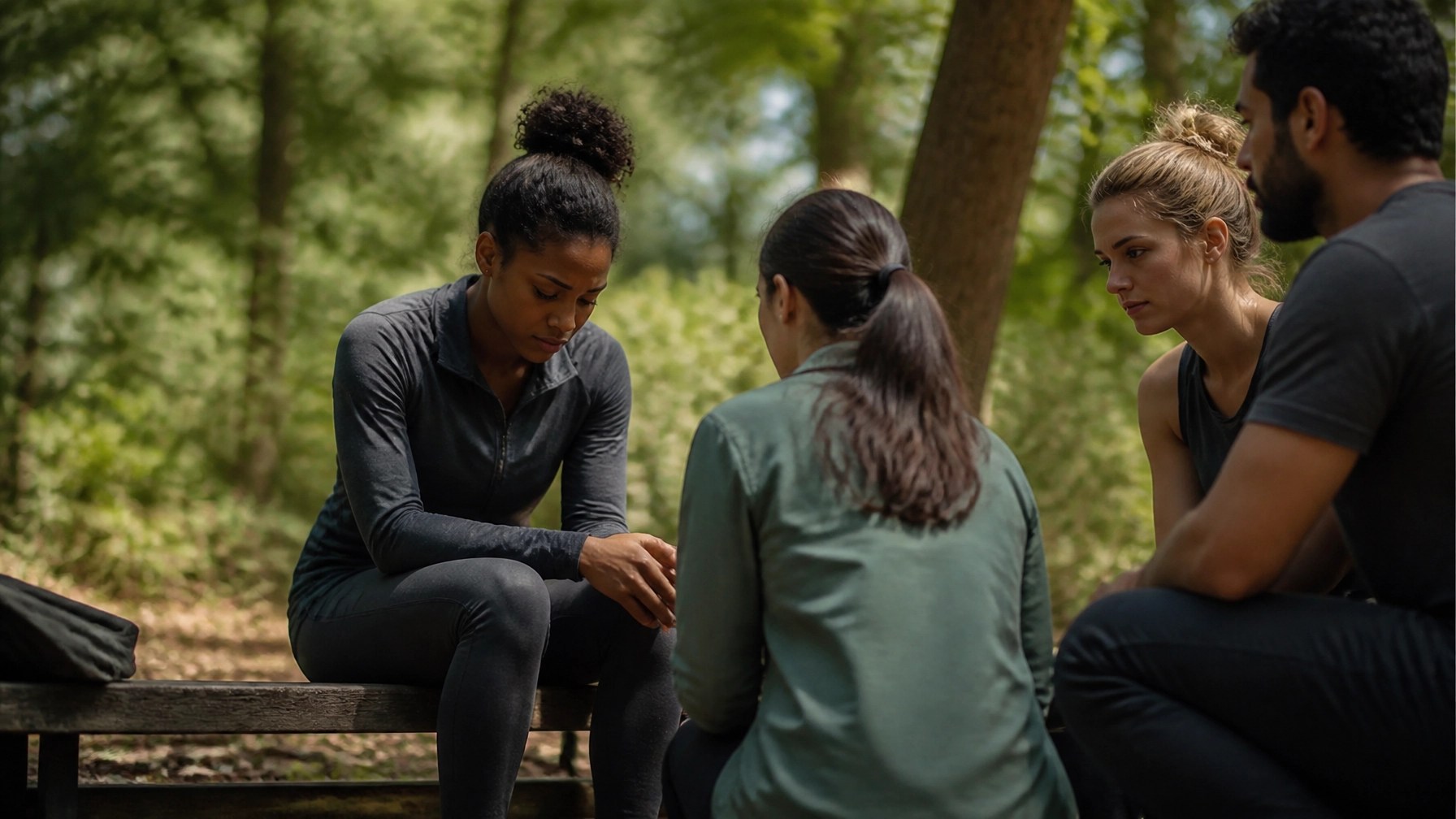
Once the question is asked, our role shifts. We are no longer the one speaking. We are the one remaining.
This is the "L" in our model: Listen.
We listen without the need to provide a quick fix. We listen without a "toxic positivity" that tells them to "just look on the bright side." We listen to the unraveling. We listen to the exhaustion. We listen because, in that moment, our presence is the only medicine that matters.
We do not need to be therapists to save a life. We do not need to have a degree in psychology to be a lifeline. We only need the willingness to ask the hard question and the endurance to stay when the answer is difficult.
The Way Forward
We are all walking paths that are sometimes shrouded in fog. We are all carrying weights that, at times, feel too heavy to bear alone.

If you suspect someone you love is drowning in silence, do not wait for the perfect moment. Do not wait for a sign that is clearer than the one you have already noticed. The direct question is not a weapon of intrusion; it is a tool of rescue.
It is an act of love that says: I see you. I am here. And you do not have to carry this alone.
Take a moment today to look at the people in your circles: your coworkers, your friends, your family. Notice the rhythms of their lives. And if the smoke is there, have the courage to ask about the fire. Your voice might just be the thing that brings them back to the light.
For more insights on how to foster honest, safe communities, explore our articles on mental hygiene or join our weekly newsletter for practical tools on human connection and resilience.
Let us be a people who are not afraid of the truth. Let us be a people who stay.
Leave a Reply