We are living in an era of noise. We are drowning in a sea of notifications, expectations, and the relentless hum of a world that never sleeps. Our minds become cluttered, our spirits grow weary, and before we know it, we are unraveling.
The weight we carry is often invisible, yet it is heavy enough to pull us under.
When the fog of overwhelm rolls in, we lose our sight. We lose our sense of direction. We lose the clarity required to see ourselves, and more importantly, the clarity required to see those around us. This is not a personal failure; it is a symptom of a life lived without the rhythm of mental hygiene.
In the work of Charis Coaching Solutions, we speak often of the necessity of presence. We speak of the power of staying. But how do we stay when the room is spinning? How do we hold space for another when we can barely find the floor beneath our own feet?
To be a person of connection, we must first be a person of grounding.
We must learn to anchor ourselves in the "now" before we can navigate the "next."
It is the first thing we do when we enter this world, and it is the most forgotten tool in our survival kit.
When we are anxious, we breathe shallowly. When we are overwhelmed, we hold our breath as if waiting for a blow to land. Not [a simple relaxation technique], but [a biological reset for a frayed nervous system].
Practice the rhythm of the four-seven-eight. Inhale the cool air for four seconds. Hold that life within you for seven. Exhale the heat and the tension for eight.
We do this not to escape our reality, but to inhabit it. We do this to tell our bodies that, despite the noise, we are safe in this moment.

There is a profound honesty in the floor.
It does not ask anything of us. It does not demand a performance. It simply holds us.
Take off your shoes. Feel the texture of the carpet, the cold of the tile, or the softness of the grass. Wiggle your toes. Press your heels down. Notice the exact point where your body meets the earth.
When we feel like we are floating away into the stratosphere of our own thoughts, the weight of our feet reminds us that we are still here. We are physically present. We are grounded in the physical world, even when our minds are wandering through the shadows.
This is a core tenet of mental hygiene: returning to the body to quiet the brain.
Our senses are the bridges between our internal chaos and the external reality.
When the world feels like a blur, we must force ourselves to notice the sharp edges. We must force ourselves to see the mundane details that we usually overlook.
Name five things you can see. Name four things you can touch. Name three things you can hear. Name two things you can smell. Name one thing you can taste.
We are not just listing items; we are reclaiming our attention. We are pulling our focus back from the "what ifs" of the future and the "if onlys" of the past. We are placing ourselves back into the room where we are actually standing.
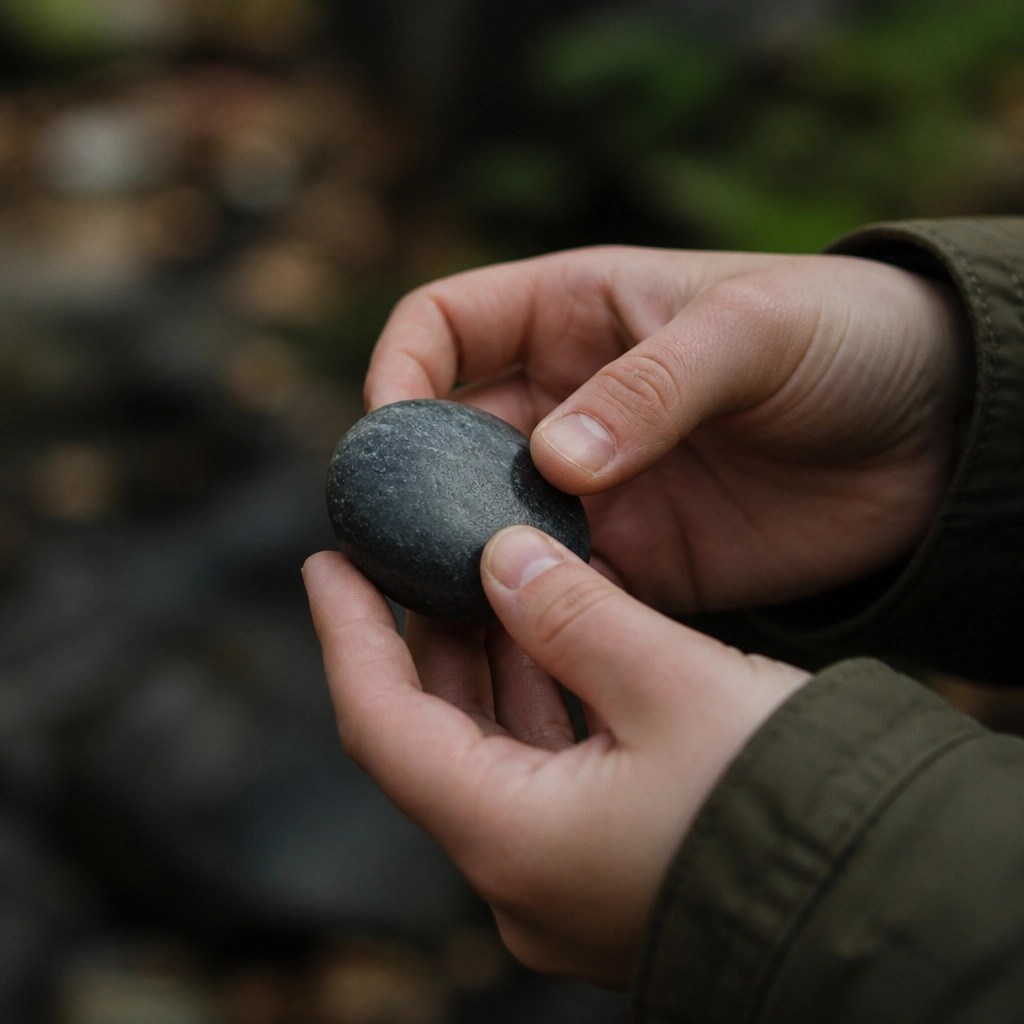
Find a small object. A smooth stone from a riverbed. A heavy coin. A piece of fabric.
Hold it. Feel the weight of it in your palm. Is it cold? Is it rough? Does it have edges or is it perfectly round?
We often overlook the power of tactile connection. In my book, The Suicide Conversation, I emphasize that presence is often found in the small, physical ways we choose to stay with someone. Carrying a grounding object is a way to stay with yourself. It is a tangible reminder that reality is solid, even when our emotions feel like water.
Sometimes, the mind is too loud for gentle whispers. Sometimes, we need a shock to the system to break the cycle of rumination.
Splash cold water on your face. Hold an ice cube in your hand until it begins to sting. Drink a glass of very hot tea and feel the warmth travel down your throat.
The sudden shift in temperature forces the nervous system to pay attention to the skin. It cuts through the mental noise with a sharp, physical sensation. It is not [a distraction], but [an intervention]. It is a way to hit the "pause" button on an emotional spiral so that we can regain our footing.
Vague feelings are harder to manage than specific ones.
We say, "I'm stressed," or "I'm not okay." These are clouds that cover everything.
Instead, describe the room with clinical detail. "The walls are a pale beige. There is a wooden desk with three scratches on the left corner. There is a blue lamp casting a yellow light."
By engaging the logical, descriptive part of the brain, we create distance from the emotional, reactive part. We move from being in the storm to observing the storm. Clarity begins with the courage to name things exactly as they are, without the weight of judgment.
We often talk to ourselves in ways we would never talk to a friend. We berate, we criticize, we demand.
In moments of unraveling, we need a different kind of voice. We need the voice of the compassionate observer.
Repeat simple, grounded truths. "I am here. I am safe. I am breathing."
Not [toxic positivity that ignores the pain], but [realistic truth that acknowledges the moment]. We do not have to be "happy" to be grounded. We only have to be present. We only have to admit that for this second, in this chair, in this room, we are surviving.

Our bodies often hold the tension we are trying to ignore. We hunch our shoulders. We clench our jaws. We coil ourselves tight like a spring.
Reach your arms toward the ceiling. Roll your neck. Feel the stretch in your calves.
By moving our bodies with intention, we remind ourselves that we have agency. We are not just passive recipients of our emotions; we are active participants in our physical existence. Stretching is a way of claiming the space we occupy. It is a way of saying, "I am here, and I am taking up my rightful place in the world."
When the "noise" is deafening, we must give the brain a task that requires its full attention.
Count backward from one hundred by sevens. Spell your name, and your mother's name, and your best friend's name backward. Categorize every animal you can think of starting with the letter 'B'.
This is mental hygiene in its most practical form. It clears the "clutter" of intrusive thoughts by occupying the tracks of the mind with something neutral and structured. It creates a temporary clearing in the woods where we can sit and catch our breath.
Finally, we must learn to be still.
Not [the silence of emptiness], but [the silence of sanctuary].
Find a corner of your home, or a bench in a park, where you can simply exist for five minutes without a screen, without a book, and without a goal. Notice the light moving across the floor. Notice the sound of the wind in the leaves.
In The Suicide Conversation, we discuss how the most life-saving thing we can offer someone is our presence: our willingness to sit in the dark without trying to fix it. We must learn to offer that same grace to ourselves.
We must learn to stay.
Emotional clarity is not a destination we reach once and for all. It is a practice. It is a rhythm. It is the quiet work of mental hygiene that we perform every single day so that we don't wake up one morning and realize we've been quietly drowning for months.
When we are grounded, we are more than just calm. We are capable.
We are capable of seeing the pain in our neighbor's eyes. We are capable of hearing the unspoken plea in a friend's voice. We are capable of showing up for the hard conversations that change lives.
If you are looking for more resources on how to build these rhythms of resilience, I invite you to explore our books and trainings. Together, we can learn to build bridges of connection that weather even the darkest storms.
Look around the room right now.
What is one thing you can touch?
Stay there for a moment.
You are here.
And that is enough.
Leave a Reply