A place to begin
Tools for the hard conversations.
You do not have to know everything before you take the next right step. These guides offer language, structure, and a little more steadiness.
Free library
Take what helps.
01Stanley-Brown Safety PlanA practical plan for navigating a moment of acute risk.Download ↗02How to Have the Suicide ConversationA guide for opening a direct, compassionate conversation.Download ↗03Handbook for Coping with Suicide GriefSupport for the long, nonlinear work of surviving a loss.Download ↗04How to Manage a Suicidal EmployeeA workplace guide for leaders trying to respond responsibly.Download ↗05NIMH — Warning Signs of SuicideOfficial NIMH guide to recognizing suicide warning signsVisit ↗06988 Suicide & Crisis Lifeline — Help Someone ElseStep-by-step guidance for supporting someone in crisis, from the 988 LifelineVisit ↗07SAMHSA — Find Treatment LocatorsLocate mental health and substance use treatment services near youVisit ↗08VA — Suicide PreventionSuicide prevention resources and support for veterans and their familiesVisit ↗09AAP — Youth Suicide Prevention ResourcesCurated suicide prevention resources for parents, caregivers, and those who work with youthVisit ↗10VA — Lethal Means SafetyPractical guidance on reducing access to lethal means during moments of crisisVisit ↗11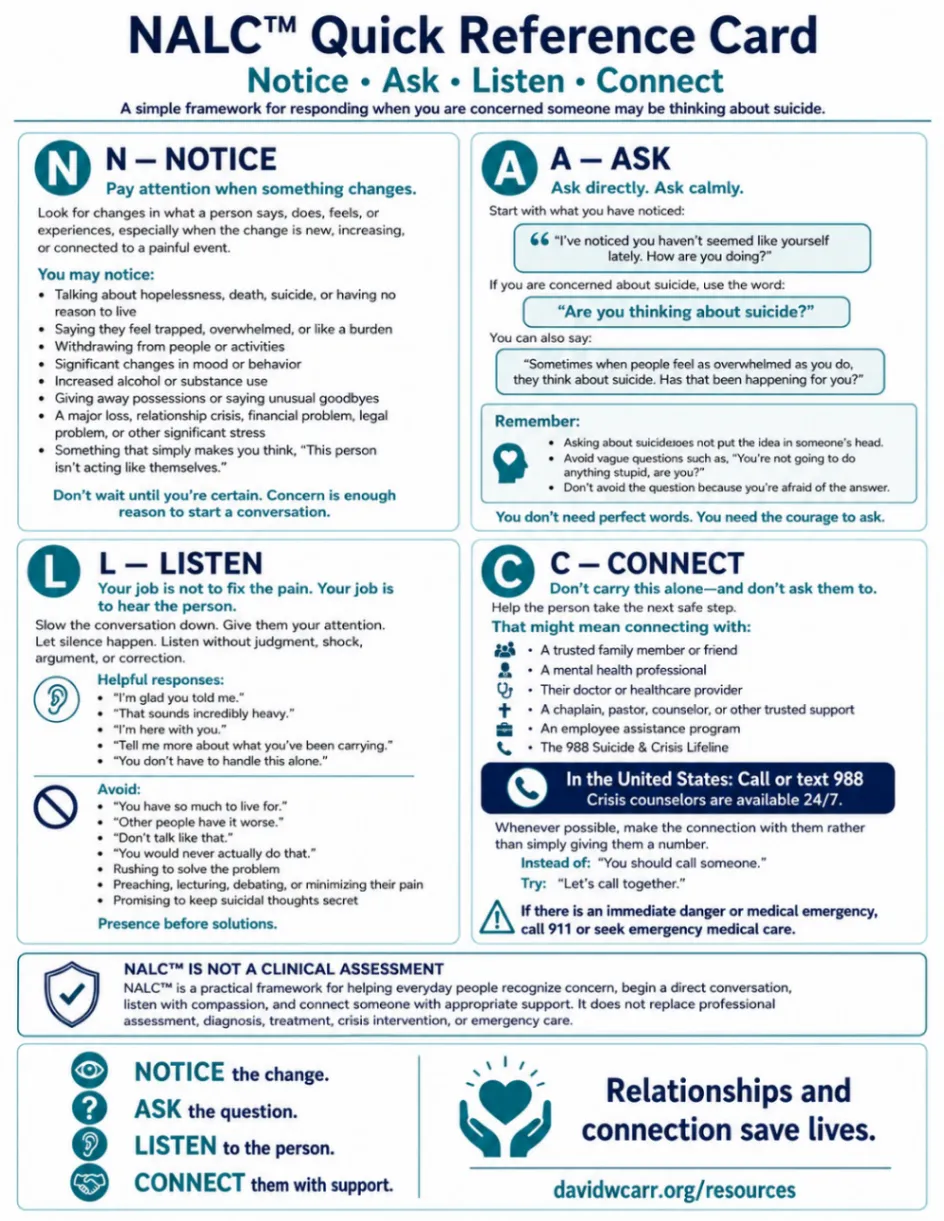 NALC Quick Reference CardA simple Notice • Ask • Listen • Connect framework for responding when you are concerned someone may be thinking about suicide.Visit ↗12Worried About Your Child? A Parent’s Guide to the Suicide ConversationA practical guide for parents who want to recognize warning signs, begin a direct conversation, and connect a child with support.Visit ↗13OSV Leadership Theory — Oriented | Safe | ValuedA human-centered leadership framework built around three conditions people need to follow well: they need to know where we are going (Oriented), feel safe enough to speak (Safe), and feel valued enough to know we will listen (Valued).Visit ↗
NALC Quick Reference CardA simple Notice • Ask • Listen • Connect framework for responding when you are concerned someone may be thinking about suicide.Visit ↗12Worried About Your Child? A Parent’s Guide to the Suicide ConversationA practical guide for parents who want to recognize warning signs, begin a direct conversation, and connect a child with support.Visit ↗13OSV Leadership Theory — Oriented | Safe | ValuedA human-centered leadership framework built around three conditions people need to follow well: they need to know where we are going (Oriented), feel safe enough to speak (Safe), and feel valued enough to know we will listen (Valued).Visit ↗The book
The Suicide Conversation
A practical and compassionate guide for recognizing when someone is struggling, starting a meaningful conversation, and staying present without trying to fix what you do not understand.